


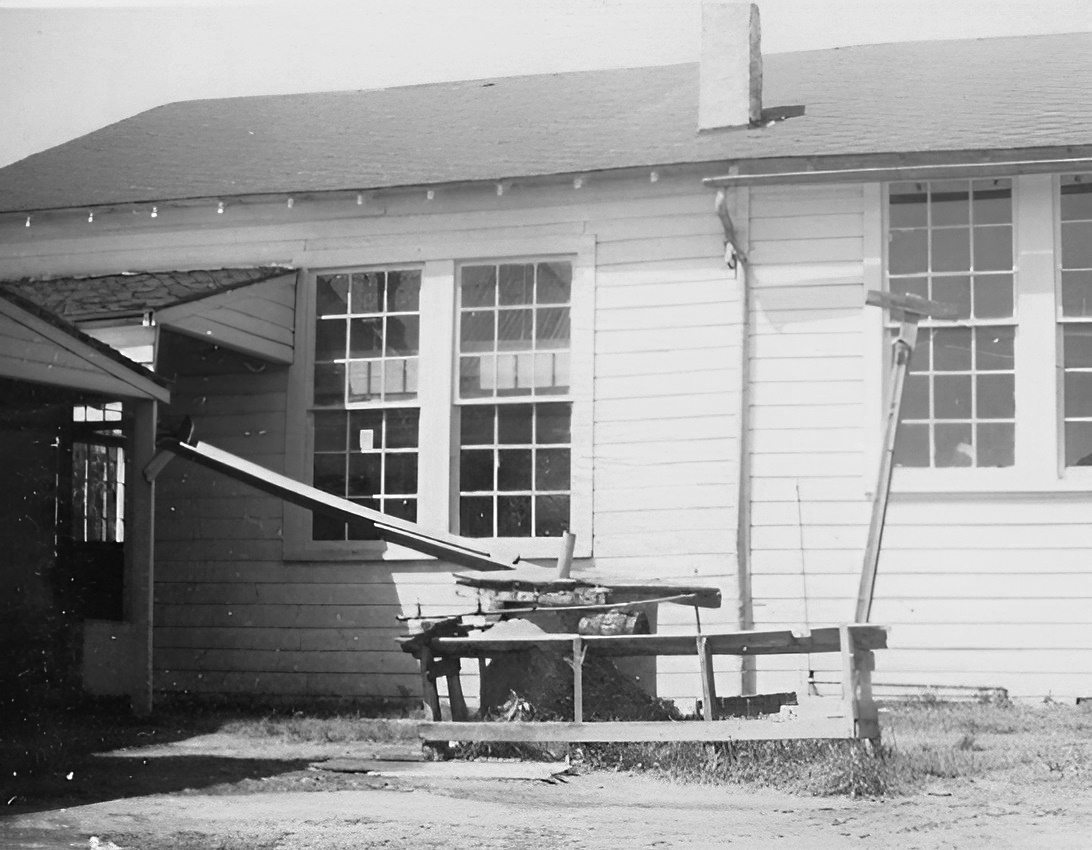
On July 28, 1966, the Mt. Vernon Optic Herald celebrated improvements on our downtown plaza. The Garden Club had put in flower beds and set up martin houses; vocational-agriculture classes and the 4-H Club had cultivated spots for shrubs and trees. Further, County Agent Charlie Brown had designed a watering system to be installed later, along with a garden fountain and a "spigot for drinking."
Our plaza grew out of the ingenious Harry Smith’s mayoral tenure (1912-1916). His 1951 obituary says he “designed and superintended the building of the City Park,” with its unique raised and rail-encircled design (functional iron rings for hitching horses and wagons still adorn the plaza). The April 2, 1915, Optic Herald had reported construction of what it affectionately called “our little park on the square.”
During my work on this post, Lauren Lewis directed my attention to an article in the Jacksboro Gazette, April 1, 1915, describing Mt. Vernon’s “work on the park in the center of the public square,” where officials were “having the grounds beautifully arranged with walks, flower beds, hedges, fountains, and shade trees.” We're concerned today, as they were in 1915 and in 1966, with "fountains," with access to water. We can’t exaggerate the importance of open “watering places” to earlier rural Texans and their animals. Today’s special utility districts wouldn’t supply the homes of many rural Texans with piped-in water until the 1960s.
“The History of Franklin County, 1874-1964,” compiled by the Mt. Vernon Key Club and edited by County Agent Charlie Brown, tells of access to water in the years prior to the building of the new Franklin County Courthouse in 1912. At each day’s start in 1911, downtown merchants drew a few buckets of water from open wells around the square for their daily needs. In 2026, the average American household of four persons uses three hundred gallons per day!
Without enough water to mop, merchants only sprinkled their floors each morning before sweeping out dust and bugs. Some needed their water to last; the drug stores, with their soda fountains, and the square’s one café prepared food and drink and washed dishes all day long. And they opened early, not only to brace for a full day’s business but also, as one Key Club source puts it, “to get to the wells before the water became muddy and filled with grass from the well rope.”
Further complicating distribution, a bunch of hogs wallowed in the wastewater around the wells on the public square. Livestock of every sort was kept with an open-range understanding by residents: They needed fencing only to keep animals out of their yards; branded or known-by-sight cows, calves, and horses ran at large.
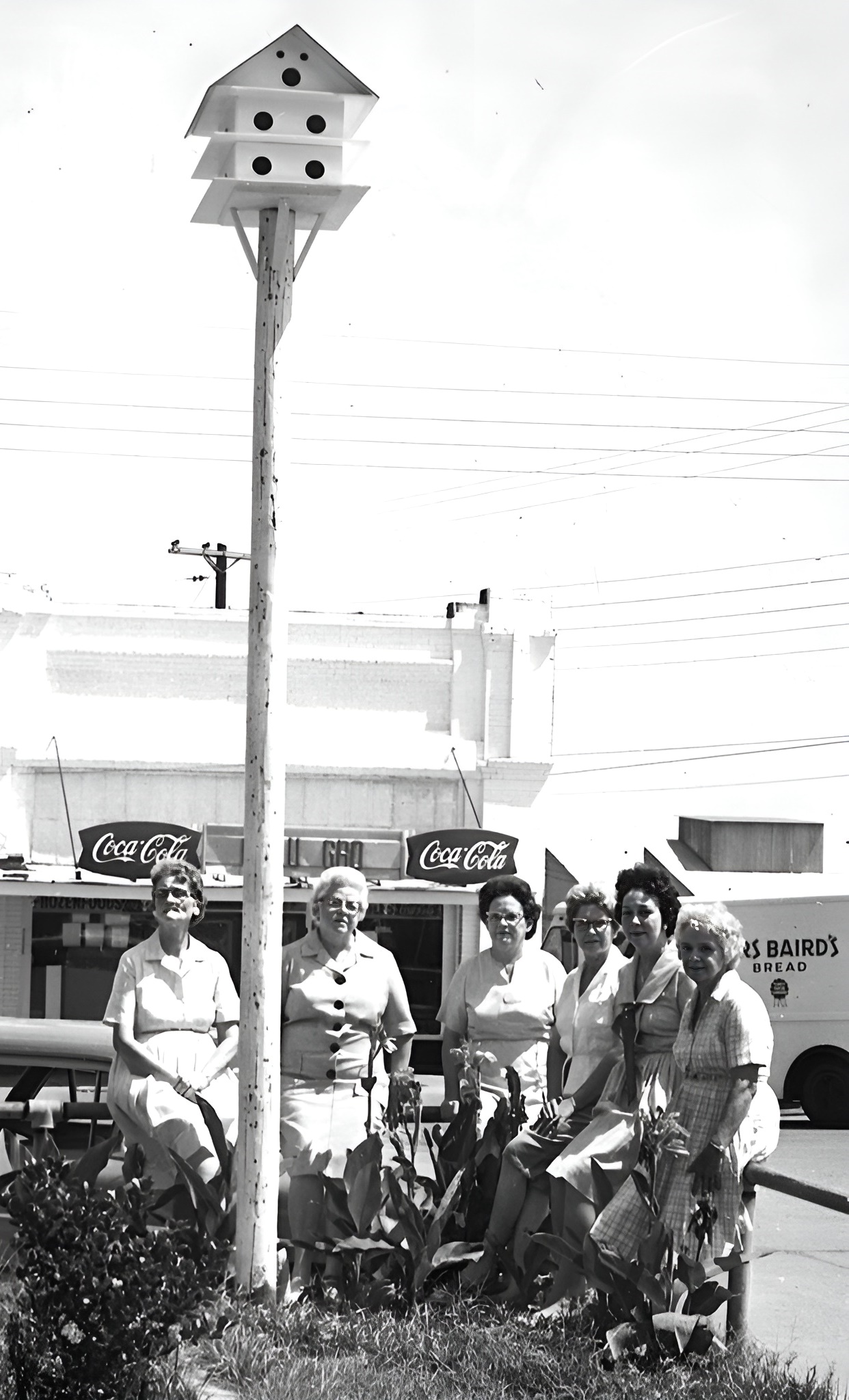
As concerns with public health grew in importance, this situation had to change. By 1911, city leaders had agreed on rapid, if painful, economic and social development; so, on October 27, the Optic Herald carried a story of far-reaching importance. Even before the completion of a new courthouse and construction of the plaza, the City Council had ordered “an election on the waterworks proposition.” Then, on December 22, the newspaper reported a vote in favor of issuing bonds totaling $20,000 to finance building the proposed waterworks. Before long, public officials would boast of plentiful, pure water supplied by multiple springs and piped into town from a reservoir-well on South Holbrook.
February 14, 1913, a front-page article in the Optic Herald, entitled “Public Watering Place,” reported that the City Council had ordered the City Marshal and the Waterworks Superintendent “to put up a first-class watering place on the square right away.” The writer editorialized, “Now we have plenty of good pure water, and farmers will have no cause for complaint on that line as they have had in the past.”
Piped-in water made downtown public wells largely obsolete. Colonel Dan T. Bolin, writing a series of Optic Herald articles on the town’s history in 1925, speaks of “the public well” at that time, located on the north side of the square where Henry Weaver had made and sold furniture, cabinets, and caskets in the 1880s. Richard Mercer, a resource for the book “A Walk through Mt. Vernon,” suggests that this lone surviving well was still in use in 1930.
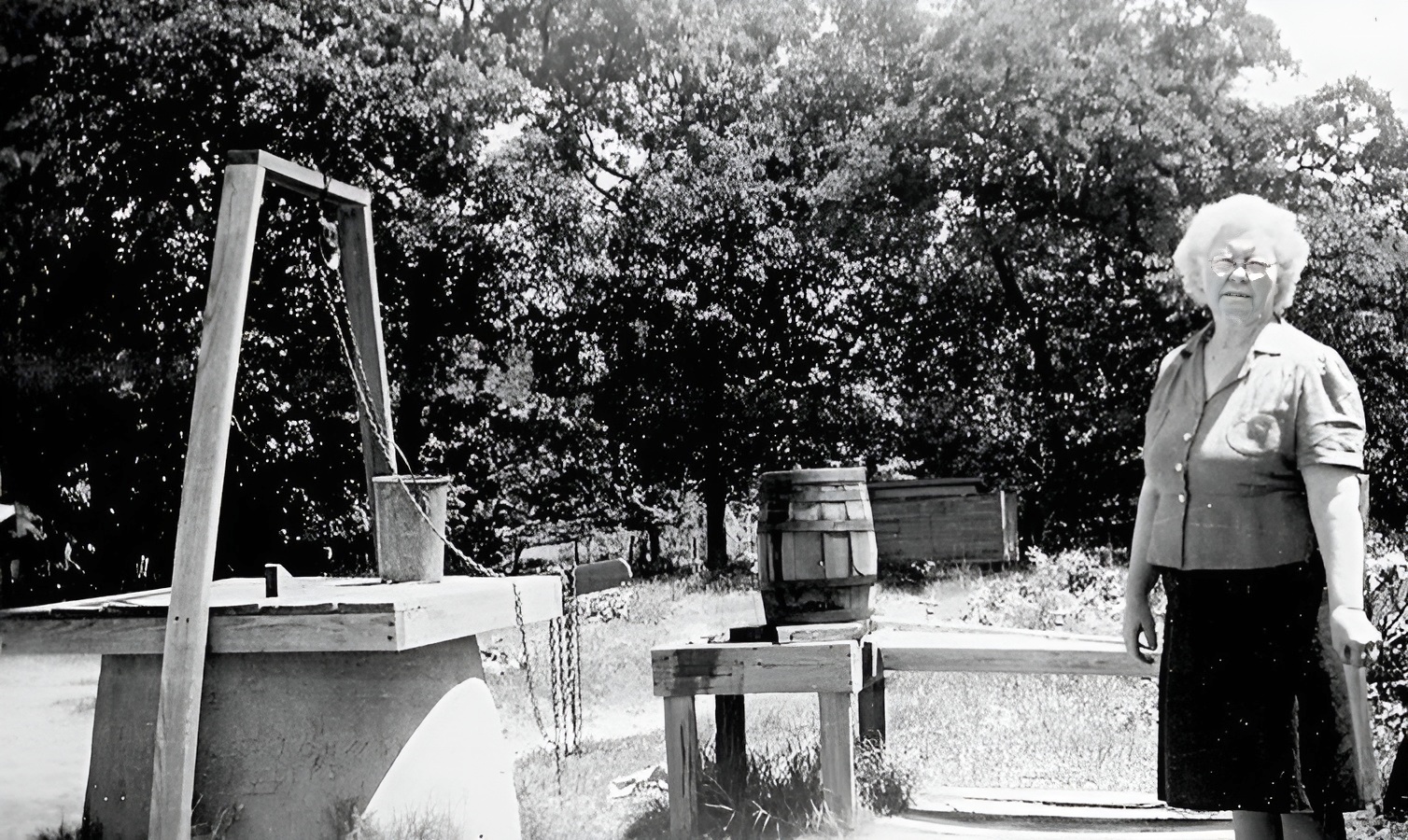
At her kitchen table one sizzling summer afternoon in 1981, my Aunt Ivey must have had this same landmark and its history in mind when she poignantly recalled the wreck of Weaver’s Well: “Old people cried as the out-of-town workers filled it in with stone.”
Some of my generation can still recall “watering places.” My earliest memories include scenes from the drought of 1956: In one, I’m standing on the banks of a dry pond at the Hicks farm, where there was no tap to turn, no piped-in water, nothing but a back-porch cistern for a decade to come. In another, I’m watching Daddy fill barrels from a drop-down canvas hose behind the old Fire Station up town. Local historian Ray Loyd Johnson referred to this as the Water Truck Station and recalled the nearby Watering Trough for draft animals.
Facing problems that challenge contemporary city leaders, Mayor Harry Smith and members of the City Council in earlier decades succeeded in managing development for their time. But “watering places” still figure large in making life comfortable for a city’s residents, as well as charitable toward its rural neighbors and attractive to visitors.
This article is an excerpt from the author’s book, “Bottomland Credentials.”